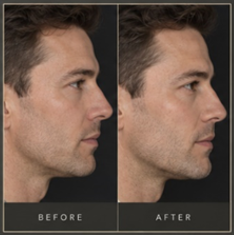
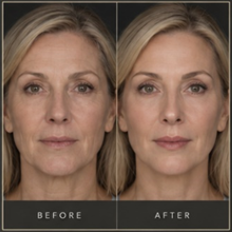
Tailored brow-lift techniques designed to restore brow position, balance and natural expression.
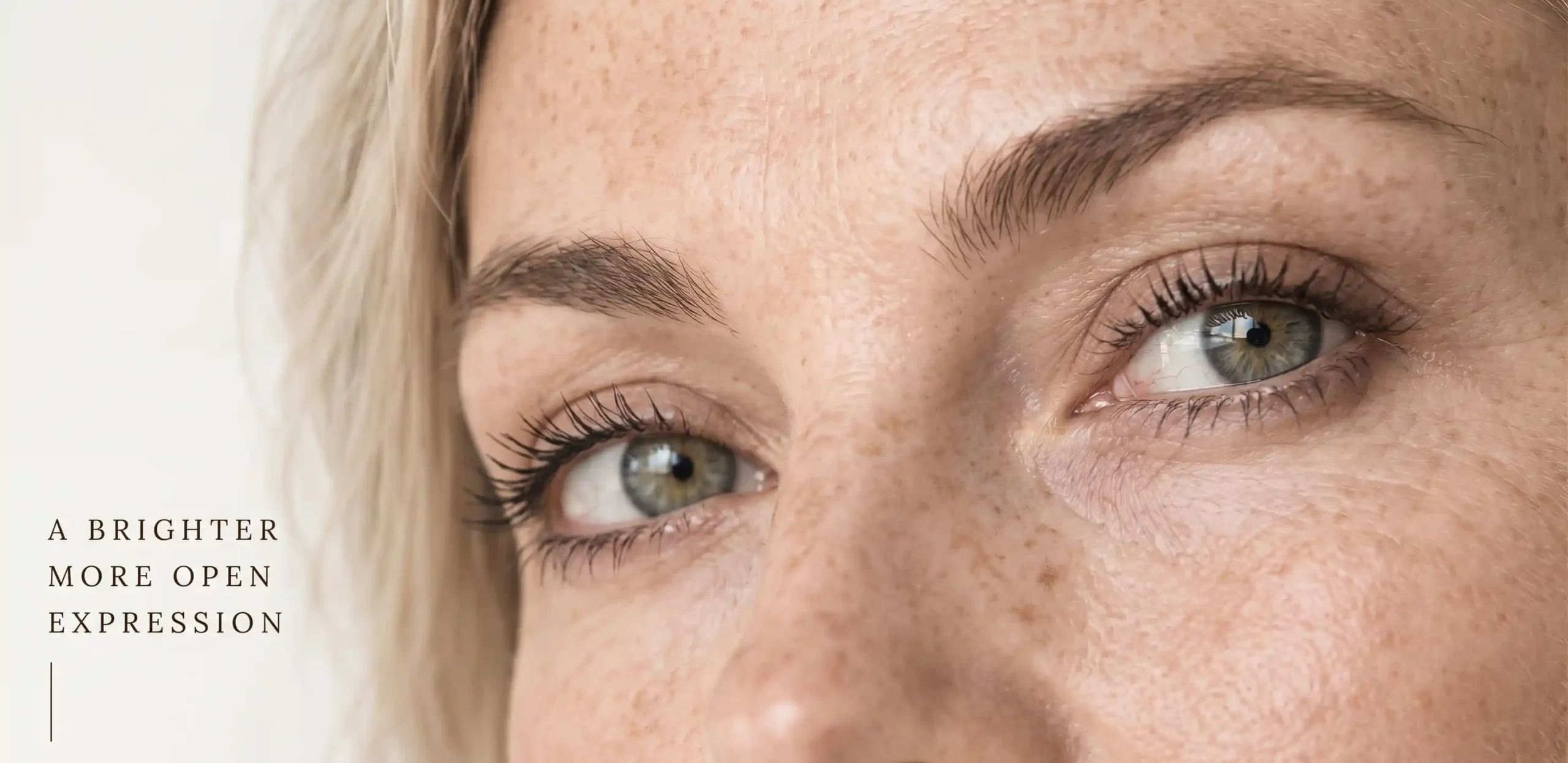
Natural elevation. Refined shape. A brighter, more rested upper face.
MR MATTINE
FACIAL PLASTIC SURGERY | A NATURAL APPROACH
BROW LIFT SURGERY
RESTORING BROW POSITION. REFINING THE UPPER FACE.
The eyebrows have a major influence on the appearance of the eyes and upper face. With ageing the brows may descend, particularly at the outer ends, causing hooding, heaviness and a more tired appearance.
Brow lift surgery is designed to restore support and reposition the brows, while preserving natural expression.
Mr Mattine offers a range of brow-lifting techniques and selects the most appropriate approach according to each patient’s individual anatomy, brow shape and position, forehead height, hairline, skin laxity, and the degree and direction of elevation required.
" Natural elevation. Refined shape. A brighter, more rested upper face. "
MR MATTINE
DIFFERENT TYPES OF BROW LIFT
A RANGE OF TECHNIQUES FOR INDIVIDUAL NEEDS
Direct Brow Lift
Useful in selected patients with more significant brow descent or asymmetry.
Endoscopic Brow Lift
A minimally invasive approach using small scalp incisions and endoscopic guidance.
Coronal Brow Lift
Addresses more extensive brow descent and can be useful when forehead height or hairline change is also relevant.
Lateral / Temporal Brow Lift
Targets the outer brow and temple region where lateral hooding and descent are often most noticeable.
Transblepharoplasty Brow Lift
Combines brow support with upper eyelid surgery in selected patients when appropriate.
improve the relationship between the brow, forehead and eyes
create a more rested and refreshed appearance
The aim is refinement rather than excessive elevation.
NATURAL. BALANCED. YOU.
The Aim of Brow Lift Surgery
The objective of brow lift surgery is not simply to create higher eyebrows.
It is to restore a more youthful, supported and aesthetically balanced relationship between the eyebrow, eyelid, forehead and temple, while preserving natural facial expression.
The result should not look surprised, excessively arched or obviously operated upon.
INDIVIDUALLY SELECTED TECHNIQUES FOR DIFFERENT PATTERNS OF BROW DESCENT.
There is no single approach that is right for everyone. A range of brow-lift techniques can be used depending on your anatomy, the pattern of brow descent and your overall aesthetic goals.
Mr Matthew Soles lifts the most appropriate technique for each patient, with a focus on natural results, precise surgical planning and a harmonious balance with the rest of the face.
A MORE REFRESHED AND RESTED EXPRESSION
NATURAL BEAUTY AT EVERY AGE
01
DIRECT BROW LIFT
Targeted brow elevation
A direct brow lift places the incision immediately above or close to the eyebrow. It can be used in selected patients with significant brow descent, local brow ptosis, those requiring revision or unusual anatomies. It is a good key option for those who have a more vertical brow descent, So yoke incision and careful scar placement matter.
Suitable for low brows
Marked lateral brow ptosis
Brow asymmetry
Limited suitability for a scalp-based approach
02
CORONAL BROW LIFT
A more comprehensive brow and forehead approach
A coronal brow lift provides broader access to the brow and forehead through an incision within or around the hair-bearing scalp. It may be helpful in patients with more advanced brow descent or more generalised upper facial ageing, and may also be adapted with a trichitial hairline incision in certain patients.
This technique enables a larger incision than some limited techniques, but allows comprehensive reshaping of the brow and forehead when required.
03
LATERAL BROW / TEMPORAL LIFT
Focusing on the outer brow
Many patients mainly seek elevation of the outer brow rather than the whole eyebrow. This technique focuses on the lateral brow and temple, through small incisions placed within or around the temporal hairline.
It is often appropriate for lateral brow descent, temporal hollowing, hooding around the outer eye or loss of lateral brow definition, with a subtler correction of lateral angulation rather than a comprehensively elevation.
04
TRANSBLEPHAROPLASTY BROW LIFT
Brows support through an upper eyelid approach
In selected patients already undergoing upper blepharoplasty, the brow can sometimes be supported through the same upper eyelid incision. This may be useful where there is mild lateral brow descent, upper eyelid skin excess or brow-lid interface heaviness, and is often considered an additional brow or scalp incision.
This technique is not intended to replace a more powerful brow lift when significant elevation is required.
05
ENDOSCOPIC BROW LIFT
Brow elevation through small scalp incisions
An endoscopic brow lift uses several small incisions within the hair-bearing scalp. A endoscope and specialised instruments are used to release and reposition the brow and forehead tissues.
It can suit patients with mild to moderate brow descent and relatively limited excess forehead skin.
POTENTIAL ADVANTAGES:
Smaller scalp incisions
No distinct eyebrow scar
Broader mobilisation of the brow tissues
The ability to reposition the forehead and brow together
The most appropriate brow-lift technique depends on the individual anatomy, hairline, brow position, skin laxity and the degree of elevation required.
There is no single ‘best’ brow lift. Each technique offers different advantages and limitations. The appropriate operation depends upon:
whether descent affects the whole brow or mainly the lateral brow
the severity of brow ptosis
existing eyebrow shape
brow asymmetry
forehead height
hairline position
hair density
forehead and temporal skin laxity
previous eyelid, forehead or facial surgery
the amount and direction of elevation required
the patient's tolerance for different scar positions
For some patients, a relatively limited procedure is sufficient. Others benefit from a more comprehensive approach.
The operation should therefore be chosen according to anatomy and aesthetic objective rather than simply the name of a technique.
INDIVIDUALLY PLANNED • NATURALLY BALANCED
ASSESS • UNDERSTAND • TREAT APPROPRIATELY
BROW LIFT AND
UPPER EYELID SURGERY
TREATING THE BROW AND EYELID SEPARATELY
A low eyebrow and excess upper eyelid skin are not the same problem, although they frequently occur together.
In some patients, what appears to be excess upper eyelid skin is partly caused by descent of the eyebrow onto the eyelid.
In others, genuine eyelid skin excess is present independently of brow position.
For this reason, careful assessment is important before deciding whether a patient requires:
• brow lift surgery
• upper blepharoplasty
• or a combination of both
Treating the correct anatomical problem helps avoid removing excessive eyelid skin when the principal issue is actually brow descent.
INDIVIDUAL ASSESSMENT. BETTER OUTCOMES.
INDIVIDUALLY PLANNED • NATURALLY BALANCED
BROW SURGERY
BROW LIFT RECOVERY
AT A GLANCE
A straightforward recovery for a brighter, more refreshed appearance.
ANAESTHESIA
Local anaesthesia, sedation or general anaesthesia, depending on the procedure.
SWELLING & BRUISING
Usually most noticeable during the first few days and improves significantly within 1–2 weeks.
PAIN & DISCOMFORT
Typically mild and well controlled with simple pain relief.
HAIR WASHING & SHOWERING
Local anaesthesia, sedation or general anaesthesia, depending on the procedure.
RETURN TO WORK
Most patients return to work and normal social activities within 1–2 weeks.
EXERCISE
Avoid strenuous exercise for approximately 6 weeks.
Sutures or staples are usually removed within 7-14 days, and swelling continues to settle gradually over the following weeks.
A RELATIVELY QUICK RECOVERY. GRADUAL REFINEMENT. NATURAL RESULTS.
RECOGNISED WORLDWIDE
A WORLD LEADER IN FACIAL SURGERY
Mr Matine is internationally recognised for his expertise in facial surgery and for his contribution to the advancement of surgical techniques and education.
He is regularly invited to lecture, deliver keynote presentations and teach live surgery at leading international meetings and conferences, sharing his knowledge and experience with surgeons worldwide.
His international reputation reflects a career devoted not only to achieving exceptional results for his patients, but also to advancing facial surgery through innovation, education and the sharing of expertise.
SHARING EXPERTISE WORLDWIDE
INTERNATIONAL PRESENTATIONS
London Facial Surgery Symposium
European Aesthetic Congress
International Rhinoplasty Society
Global Facial Feminisation Summit
British Association of Facial Surgeons
VIDEO GALLERY
SEE OUR PATIENT BROW SURGERY TRANSFORMATIONS
SHORT VIDEOS FEATURING REAL PATIENT RESULTS, SURGICAL INSIGHT AND NATURAL, BALANCED OUTCOMES.
Expert care, thoughtfully coordinated around your journey.
A GLOBAL WELCOME
We regularly welcome patients from the United States, Canada, Europe, the Middle East, Asia and beyond who travel to the UK for facelift surgery. Our team understands international travel and will support you at every stage, making the experience as smooth and comfortable as possible.
FLEXIBLE CONSULTATIONS
Your initial consultation can often take place virtually, allowing you to meet Mr Mattine, discuss your concerns and explore your options from wherever you are in the world. An in-person consultation will then be arranged before your surgery to finalise your plan and answer any remaining questions.
FULL TRAVEL SUPPORT
We can assist in coordinating any required pre-operative tests and investigations, help with accommodation, and advise on practical arrangements for your stay in the UK. Your early recovery, follow-up appointments and return travel will be thoughtfully planned to ensure you feel supported throughout your journey.
Our aim is to provide the same continuity, personal attention and standard of care wherever in the world your journey begins.
Find answers to some of the most common questions about brow lift surgery. For further information, please see our full FAQ page or contact our team.
Is brow lift surgery painful?
Brow lift surgery is generally well tolerated. Most patients describe the early recovery as a feeling of tightness, pressure or mild soreness rather than significant pain.
Discomfort is usually manageable with simple pain relief and tends to improve quickly over the first few days. The amount of swelling and bruising varies according to the technique used and whether the brow lift is combined with other facial procedures.
How long does brow lift surgery take?
The operating time depends on the technique being performed and whether the procedure is being combined with other surgery.
As a general guide, a brow lift may take approximately 1–3 hours, although more complex or combined procedures may take longer.
Can brow lift surgery be performed under local anaesthesia?
Yes. Many brow lift procedures can be performed under local anaesthesia, often with sedation, depending upon the technique and the patient’s preference.
More extensive surgery, or brow lifting performed together with other facial procedures, may be better suited to general anaesthesia.
How soon will I see the result?
An improvement in brow position can usually be seen immediately after surgery, although swelling will initially affect the final appearance.
The brow position becomes progressively more natural as swelling settles. Many patients see a significant improvement within the first few weeks, with the result continuing to refine over the following months.
How long does recovery take after a brow lift?
Most swelling and bruising improve considerably during the first 1–2 weeks.
Many patients feel comfortable returning to work and normal social activities within this period, although this varies according to the technique used and whether other procedures have been performed at the same time.
Strenuous exercise should generally be avoided for approximately six weeks.
When can I wash my hair after brow lift surgery?
Hair washing and showering are normally possible after approximately 4–5 days, once the initial dressings have been removed.
Patients are advised to wash gently and keep the incisions clean while following the specific wound-care instructions provided after surgery.
Will a brow lift change my hairline?
It can, depending upon the technique used.
Some approaches are designed to leave the hairline largely unchanged, while others can be modified to raise or lower the hairline where this is part of the patient’s aesthetic objective.
Hairline position and forehead height are therefore important considerations when selecting the most appropriate brow-lift technique.
Brow lift surgery can be combined with other facial procedures to address multiple areas of concern and achieve a harmonious, natural result.
Facelift
HARMONY ACROSS THE FACE
Fat Grafting
RESTORE VOLUME AND CONTOUR
Forehead Lift
A SMOOTHER, MORE YOUTHFUL FOREHEAD
Browlift
IMPROVE SKIN QUALITY AND TEXTURE
Forehead Shortening
A MORE BALANCED FACIAL PROPORTION
TESTIMONIALS
CHECK OUR VERIFIED PATIENT TESTIMONIALS
REAL EXPERIENCES. REAL RESULTS.
H. P.
FACIAL BOTOX
"I always feel confident in Mr Mattine's hands. I am thrilled with my results and would not consider going anywhere else for facial surgery."
L. H.
LOWER FACE/NECK LIFT
"From the very first consultation, Mr Mattine made me feel completely at ease. His expertise and attention to detail are outstanding. I am delighted with my results."
M. H.
FACIAL PLASTIC SURGERY
"I could not have asked for a better surgeon. Mr Mattine takes the time to explain everything and provides exceptional care throughout. I would highly recommend him."
S. R.
DEEP PLANE FACELIFT
"The results have exceeded my expectations. My face looks refreshed and natural — exactly what I wanted. Mr Mattine and his team have been wonderful throughout the whole journey."
By submitting this form, you agree to be contacted by Samuel Mattine Facial Plastic Surgery by phone, text or email about your enquiry and any related appointments